The Margin Leak Hiding in Every Grocery Invoice
by Hannah Khouri
For grocers operating on profit margins of just 1% to 3%, keeping close tabs on every dollar coming in and out of the business is a matter of survival. Finance teams are under pressure to ensure the business is paying its suppliers exactly what they agreed to, no more and no less.
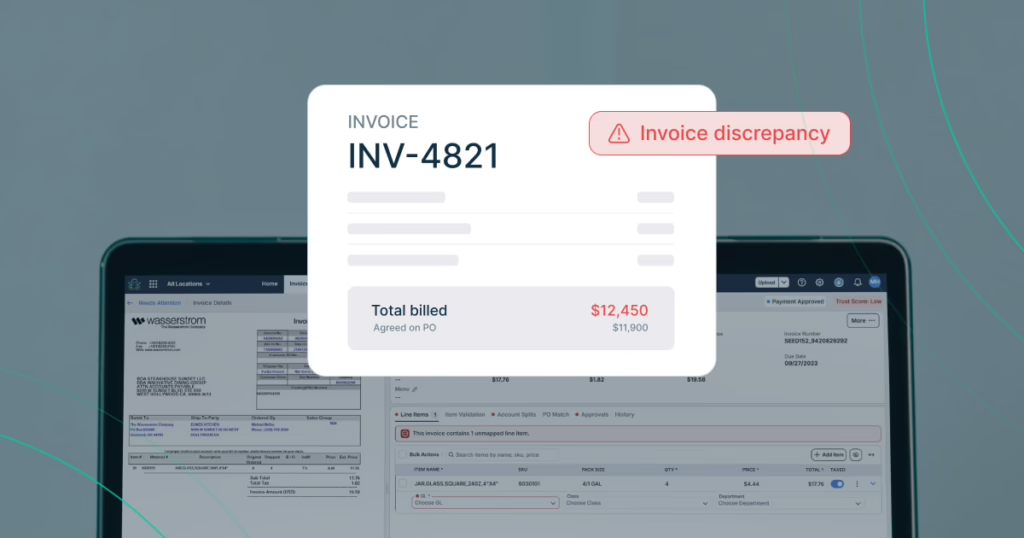
But grocery invoice discrepancies are a lot more common than many operators realize. A recent analysis of Ottimate customer data found that 26% of grocery invoices contain a discrepancy, and price mismatches are the most common culprit.
When grocery finance teams are busy processing thousands of invoices across multiple locations, it’s easy to overlook a vendor charging a few cents more for a case of vegetables, a promotional discount that’s missing, or a direct store delivery (DSD) that arrives with fewer items than the store was billed for.
On their own, each grocery invoice discrepancy might seem minor. But when multiplied across hundreds of vendors, thousands of products, and dozens of locations, it’s a completely different story.
In fact, grocery operators are overcharged an average of $37,611 per year, per location according to Ottimate customer data.
Grocers only see the full picture when they start tracking price variances. And as many operators have discovered, the true cost of invoice discrepancies is often much greater than they expected.
The math behind a $37,000 overpayment
Every week for the past year, a grocer has ordered 15 cases of a popular product. Then one day, an invoice comes through with a per-case price that’s slightly higher than what the grocer agreed to. From then on, all invoices from the vendor list the new, higher price.
The difference is only a few dollars per case. Because the team is busy managing hundreds of invoices for each location and the invoice total seems reasonable, the discrepancy goes unnoticed for four weeks.
During those four weeks, the store overpays for 60 cases of the product. Once you factor in the missed price adjustment, this oversight could cost the business nearly $500 in lost margin. And that’s just for one product.
Now consider how many similar grocery invoice discrepancies could be slipping through across the rest of the store’s inventory. According to the Food Industry Association, the average supermarket carries 33,248 items, and those products often come from dozens or even hundreds of different suppliers. Prices fluctuate, promotions change, and price variances can be easy to miss across so many products and invoices.
It would take only about 77 missed items per year across all suppliers to reach the industry average of $37,000 in annual overpayment. That equates to about six or seven discrepancies per month.
When you consider the fact that 26% of grocery invoices have at least one discrepancy, that $37,000 figure suddenly doesn’t seem quite so far-fetched.
A grocery operator with multiple stores could see an even bigger impact. If a discrepancy that costs one location $500 goes undetected across 15 locations, it could easily add up to a $7,500 overpayment for the business.
$5 million, 125 stores, 8% of invoices
Grocery invoice discrepancies that seem small on their own can quickly add up to significant financial loss. This is especially true for grocery operators with dozens or even hundreds of store locations.
One national grocery brand with approximately 125 stores across the West Coast understands this reality all too well.
Like many grocery chains, this operator depends on direct store delivery (DSD) vendors to help keep its stores’ shelves stocked. These DSD vendors deliver high-volume products like snacks, beverages, and baked goods directly to each store location.
With so many deliveries and invoices coming in for 125 locations, tracking price discrepancies was no easy feat. Store employees focused on receiving daily deliveries and keeping shelves stocked, and a price mismatch on a single invoice could easily slip through the cracks.
The company didn’t have a clear picture of how often DSD discrepancies occurred or how much financial impact they had on margins. That is, until they started using Ottimate’s automated price variance detection.
What the company learned was shocking. A full 8% of its DSD invoices had price variances exceeding their $15 threshold.
In other words, about one out of every 12 DSD invoices had a price discrepancy big enough to warrant a closer look. When you added those discrepancies across all 125 stores, the total was a staggering $5 million. That averages out to about $40,000 in DSD invoice discrepancies per store.
DSD discrepancies sneaking in were nothing new. They were there all along. But because the company didn’t have an effective way to identify and track them across all 125 locations, they had little visibility into the cumulative impact of minor discrepancies across a large store footprint.
Ottimate gave the company a clear picture of the financial impact, and the team finally had the information it needed to investigate pricing mismatches and work with vendors to correct them.
Shrinking a $50 blind spot to a $5 one
A grocery vendor arrives at the dock and hands over the delivery and an invoice. Then the store team springs into action to receive it, confirm everything was received, enter the invoice into the system, and get the products onto the shelves. Now, multiply that across the dozens or more deliveries that show up every day, and it’s easy to see how things often feel pretty chaotic.
One national grocery brand invested in handheld receiving devices to help calm the chaos. In some ways, these tools did make it easier for the team to track deliveries and verify invoices. But they had one major limitation. They didn’t validate pricing and quantities at the line-item level.
This left the business with a $50 discrepancy window per invoice. In other words, an invoice could have up to $50 in discrepancies without triggering further review.
One $50 discrepancy might not seem like something to lose sleep over. But consider the fact that 70% of grocery businesses process 5,000 or more invoices every month. If even a small percentage of those invoices slip through with undetected discrepancies, it can add up to thousands of dollars each month, and potentially millions over time for a multi-location operator.
The company had a $50 blind spot, and the financial impact was growing. That is, until they found Ottimate.
Ottimate’s grocery AP automation let the chain validate invoices at the line-item level instead of relying on header-level checks. They finally had a reliable way to compare individual products, quantities, and prices against what was agreed to and what was received.
As a result, the company’s discrepancy window shrank from $50 to just $5 per invoice. That’s a 90% reduction in the amount of potential variance that could go unflagged on each invoice.
Line item validation was key to reducing this multi-location operator’s exposure to costly discrepancies. By narrowing the amount that could slip through without further review by 90%, the finance team had a better opportunity to catch pricing errors before they impacted margins.
The $1M a year that was slipping out the back door
There’s no doubt that direct store delivery (DSD) has become a key part of grocery operations. Vendors show up at the loading dock, store employees receive the deliveries, and invoices start their journey through the payment process.
But when DSD receiving is manual, cost discrepancies can easily go unnoticed. Over time, these errors can take a financial toll.
One regional independent grocery chain operating approximately 20 high-volume supermarkets, each spanning 40,000 to 60,000 square feet, is very familiar with this challenge.
Each of the chain’s 20 locations regularly received deliveries from DSD vendors. But because the business relied on manual processes to verify deliveries and check invoice prices, discrepancies often slipped through the cracks.
That changed when the operator incorporated structured DSD receiving throughout Ottimate, giving teams a consistent way to verify deliveries and flag pricing discrepancies before invoices were processed and paid.
Within a few years of implementing this structural fix, the company saved $1 million annually that had previously slipped out the back door unnoticed.
Spread across 20 locations, that’s about $50,000 in annual savings per store, or more than $4,000 per store each month. For this grocery operator, that savings makes a meaningful difference to the bottom line.
When the real problem is underbilling, not overbilling
When grocery operators hear the phrase “invoice discrepancies,” vendor overbilling is often the first thing that springs to mind. But being charged more than the agreed-upon price isn’t the only problem grocers need to look out for.
In some cases, a grocery invoice discrepancy means that the operator is being undercharged. That’s a problem with a different set of consequences.
Consider one grocery operator that was highly confident in its team’s ability to maintain high invoice accuracy. The company was rarely overbilled by a vendor, and they believed that was a good indicator that their processes were working well.
But a closer look at the company’s invoice data revealed a much different problem: widespread underbilling.
A grocer being charged less than the agreed-upon price might not seem particularly problematic. In fact, it could actually sound like a good thing. What’s the problem with saving money?
The issue is that the company made pricing decisions based on inflated cost assumptions that didn’t match what it was actually paying suppliers. The business set retail prices and evaluated profitability without an accurate picture of its true costs.
Let’s say the grocer thinks they’re paying $10 for a product, and they set the retail price for $12. That’s a gross margin of approximately 17%. But if the supplier is actually charging them only $9, the operator’s true gross margin is 25%.
That eight-percentage-point difference in margin could influence everything from retail pricing and promotions to purchasing decisions.
The example shows why invoice accuracy matters, even when a discrepancy seems to benefit the grocer. Without a clear picture of true vendor costs, the operator could be making pricing and margin decisions that aren’t based on reality.
The $30,000 surprise with no explanation
In some cases, a vendor invoice raises an immediate red flag. For example, one regional grocery operator got an unpleasant surprise when they received a vendor bill that was $30,000 more than expected. While the team noticed the issue right away, no one was quite sure whether it was caused by a pricing change, a difference between what was ordered and what was delivered, or something else altogether.
Whatever the reason, the finance team needed to get to the bottom of it.
An unexpected charge of this size was a serious concern for a grocer operating on thin margins. It also disrupted a busy team that now had to spend time digging through invoices and other records to find the source of the discrepancy and work with the vendor to resolve it.
$30,000 is a large difference to uncover on a single vendor bill. But as our earlier examples illustrate, smaller discrepancies can be just as damaging when they build up over time.
Don’t let undetected invoice discrepancies eat into your grocery margins
From a $500 pricing error to $5 million in undetected discrepancies, the examples we’ve shared illustrate just how much money can be at stake when variances go unchecked.
For grocery operators managing thousands of products and hundreds of vendors across multiple locations, these discrepancies can easily sneak through.
Getting a handle on them starts with having a clearer picture of what’s being purchased, what’s being delivered, and what vendors are really charging. When finance teams have visibility into line-item data and can compare it with purchasing and receiving records, they’re better equipped to spot discrepancies earlier and take action before they impact margins.
Curious how your grocery AP stacks up and where you could improve? Check out Ottimate’s Grocery AP Automation Benchmark Report for insights on invoice discrepancies, overcharges, payment errors, and more.