How AI Is Reshaping the Hotel Guest Experience
by Chelsea Figurski
Hotel staff are no strangers to personalizing experiences for guests. From extra pillows to treats left in rooms to birthday emails, they’ve been adding special touches to service for years. But today’s technology has moved from reactive to predictive personalization.
Instead of fighting against innovation, hotels must adapt to meet guest expectations and preferences. This means implementing technology for AI-powered bookings, predictive itineraries and upselling, and smart in-room environments. In fact, 49% of guests say their hotel experience is improved when AI provides personalized recommendations, and AI-driven dynamic pricing can lead to a 10% increase in RevPAR.
Agent-based AI bookings
You can provide a personalized experience for guests before they even enter your property. Travelers are often looking for specific locations, amenities, and pricing when searching for hotels. Search engines and online travel agents can narrow these searches down to a list, but aren’t able to account for nuances.
This is where Agentic AI is useful. Agents use natural-language requests rather than search forms and filter menus. A guest can ask their AI travel assistant to find a pet-friendly room in San Francisco near Union Square for less than $300 per night, and expect it to complete the booking without further input.
To avoid being invisible to a growing segment of travelers, hotel operators can make their inventory, amenities, and real-time pricing machine-readable. Being prepared with clean data, updated API connections, and accurate availability feeds allows the AI agents to query, compare, and book without friction.
Predictive itineraries and dynamic upselling
Historically, hotels sent templated pre-arrival emails to guests to prepare them for their stay. Better versions of this could be:
- A guest who books a late flight and lists a business purpose gets an automatic late dinner reservation prompt 48 hours out
- A couple celebrating an anniversary gets a spa offer timed to the middle of their stay, when occupancy data suggests availability and willingness to spend are both highest
- A guest who books a two-night stay with two kids gets a push notification mid-morning on day one, offering discounted cabana access for the afternoon, timed to when the pool is historically less crowded.
But none of this can happen manually at scale. Predictive personalization at this level runs on behavior signals and PMS data working together. Property management systems are doing considerably more than booking and billing now. They can feed preference histories, stay patterns, and real-time occupancy signals into recommendation engines that time upselling offers with enough precision to move the needle on revenue per available room.
An offer delivered at the right moment to the right guest profile, based on real-time availability, outperforms a blanket upgrade push sent to every guest. Hotels that build this into their tech stack typically see measurable lift in additional revenue without increasing headcount.
Smart, IoT-connected guest environments
You can also tie preference data and loyalty profiles to room controls, so that lighting, temperature, and entertainment settings are waiting when the guest opens the door to their room. For returning guests, this experience reinforces the reason to come back. For first-time guests, it shows a certain level of care and attention.
The same systems used to personalize the in-room experience for occupied rooms, like voice controls and motion sensors, can also manage energy draw in unoccupied rooms. Smart climate control that adjusts when a room goes vacant, lighting systems that respond to occupancy, and connected window shades that reduce solar heat load during checkout windows can all generate utility savings at scale.
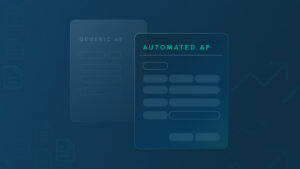
Efficiency gains on the guest-facing side mirror what’s happening across hotel back offices, where automated, data-driven processes are replacing manual and reactive ones to reduce costs and cycle times. The same mindset hotels are applying to room automation is showing up in functions like invoice processing, where AP automation tools have cut average processing times from 11 days to just over five days.
What this means for hotel operators
Guest-facing personalization has shifted from being a “nice to have” to a key part of how a competitive hotel operates.
If you’re thinking about where AI-driven efficiency belongs in your operation, the same approach reshaping the guest experience is generating results in hotel AP and finance.
Guest-facing personalization is only half the equation. See how Ottimate brings the same AI-driven efficiency to hotel AP and finance. Explore Ottimate for Hotels.